Author Archives: Tony Thornby

FAIRTRADE AND CLIMATE JUSTICE – Key Facts from the Fairtrade Foundation

Note; This is a reprint of information available on the Fairtrade Foundation website as a PDF.

In 2022 we are continuing to highlight the growing challenges that climate change brings to farmers and workers in the communities Fairtrade works with as COP26 didn’t deliver the change needed to tackle the climate crisis.

The facts are straightforward. Farmers and workers in countries such as Kenya, Ethiopia and Honduras, who have done the least to contribute to climate change, are disproportionately affected by it. The climate crisis is the biggest threat to the livelihoods of millions of small-scale farmers and agricultural workers in low-income countries worldwide.

The COVID-19 pandemic has shown us more than ever how interconnected we are globally. This interconnection is at the very heart of the Fairtrade message and is where your role begins. Farmers need better incomes and financial support to adapt to changing weather patterns and change their farming methods to ensure a low-carbon economy. By choosing Fairtrade, you show solidarity with those on the frontline of the climate crisis. You are part of the Fairtrade movement, and you havethe power to drive long-term change, not only with your shopping choices but with your support in spreading the message.

THE PROBLEM

For generations, the exploitation of people and planet has caused extreme global inequality and a climate emergency. Fairtrade farmers have told us that climate change is their biggest challenge right now.

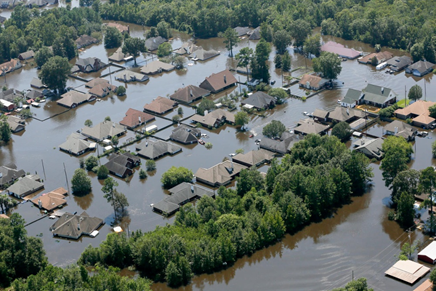
They are bearing the brunt of the climate crisis in the most climate vulnerable nations. Despite contributing the least to the climate crisis, smallholders in developing countries are disproportionately affected by increasingly frequent weather events, loss of fertile soil and crop diseases. The farmers that Fairtrade works with have seen their crops of coffee, cocoa, honey, and vegetables in Honduras, Guatemala and Nicaragua be completely devastated. At 1.1 degrees, current levels of global heating are causing communities to suffer hurricanes in Central America, floods and landslides in India, sweeping away people’s homes, destroying entire livelihoods in seconds, while swarms of locusts affect East Africa and extreme drought continues in Southern Africa. By 2050 as much as 50 percentof the global surface area currently used for coffee farming may no longer be suitable and many cocoa growing regions in Ghana and Côte d’Ivoire – who produce over half of the world’s cocoa – will become too hot to grow the crop.

Farmers have fewer resources to adapt to changes in climate and other stresses they are experiencing every day. Yet we all rely on farmers to produce the food we need for a growing global population. 80 percent of the world’s food comes from 500 million family farms. With the continuing global COVID-19 pandemic, these communities also face rising debts, falling commodity prices and widespread shocks in the global supply chains. These huge challenges, alongside already low incomes, mean these communities are often unable to invest in ways to adapt to the widespread effects of a changing climate, let alone clean energy and climate-smart farming methods needed to protect the planet’s forests and help restore biodiversity.

SUMMARY: Climate change is an immediate threat to farmers’ livelihoods, and to the products we love, like chocolate, coffee and bananas. Unless we clamp down hard on global emissions, we will all suffer. As a matter of justice and a matter of science, the matter of the climate crisis cannot be delayed any longer.

WHAT NEEDS TO HAPPEN?

The answers to climate change exist already and farmers have a big role to play. Farmers have years of experience stewarding the land they live on; farming communities in climate-vulnerable countries already have the knowledge to create solutions and to protect the ecosystems everybody relies on. What they don’t have is the financial support to make those changes happen. Climate finance and compensation for loss and damage must reach the communities most impacted by climate change who also hold solutions to farm us away from climate catastrophe.

Doing this properly means helping farmers and workers to adapt to the current impacts as well as supporting them to switch to low carbon production and transport. That cannot happen if we’re not prepared to pay for it. We cannot expect – and it is not fair to expect – farmers to absorb the costs of more sustainable methods of farming when they’re often not even able to earn a living income or living wage and cannot even adapt to the challenges they are already seeing, because the price they receive for their produce is far too low. This needs to change – and it needs to change fast. Change by 2050 is too late. The weather is changing now.

Our global trading system is balanced in favour of the powerful few. Wealthy nations have done the most to create the climate crisis. They must deliver on their promise to invest in tackling climate change right now. The G7 summit in June 2021 was a missed opportunity for farmers and the planet.

Political leaders at COP26, despite some new pledges to curb emissions which revise projected temperature rises from 3.0 to 2.4 degrees, were also unable to commit to realistic targets to keep them to 1.5 degrees. Commitments to compensate impacted communities for loss and damage due to extreme weather were also notable in their absence from the final agreement.

At the same time, the prices that businesses pay for the crops behind some of our favourite foods need to increase significantly if farmers are to escape poverty and still have the means to adapt to economic and environmental shocks. Governments must set ambitious, science-based rules and targets that will ensure that the businesses who profit the most from global trade invest in reducing their carbon footprint, and support those experiencing the harshest effects right now. We needbusinesses to go further in committing to fair pricing, long-term partnerships and investment in adaptation with farming communities as well as transparency on carbon emissions and climate risks throughout their supply chains. As global trade changes in ways we could only have imagined before the pandemic, poverty will also continue to be a key contributor to further environmental degradation as farmers are forced to make harder choices.

SUMMARY: Farmers in climate vulnerable countries need empowerment, fair value, fair prices, and fairer trading practices to resource the investment needed for mitigation, adaptation, diversification and resilience in the face of the climate crisis. And we can’t rely on global summits and governments to take action fast enough to solve the climate crisis. Ahead of COP27, we must build pressure on governments to keep 1.5 alive. By doing so, we stand in solidarity with people in climate vulnerable nations who will be most impacted by temperature rises.

HOW DOES CHOOSING FARTRADE SUPPORT FARMERS FACING THE CLIMATE CRISIS NOW?

Fairtrade is about social justice. Poverty, caused in part by decades of chronic underpayment, is a root cause of inability to adapt and mitigate to climate change. Poverty prevents smallholder farmersfrom developing their businesses: this fuels a vicious cycle of low productivity and declining incomes. The less farmers earn, the harder it is to secure good harvests. All this leaves them financially unable

to face up to the challenges of climate change. Choosing Fairtrade means choosing improvements in farmers’ livelihoods with collective strength through co-ops and their bargaining power, the protection of a minimum price and Fairtrade Premiums. More money means more climate resilience into the future.

While the money paid to farmers remains low, they will continue to struggle to cover just their basic human rights; a nutritious diet, their children’s education and family healthcare, let alone find extra funds to pursue climate friendly farming, or to protect themselves and their harvests from extreme weather. In 2019, Fairtrade launched an ambitious new living incomes campaign to lead the way to a sustainable future for cocoa farmers. A living income would provide farmers with a decent standard of living – enough to cover all their cocoa farming costs and enough to cover their basic human rights.

Fairtrade works on many levels to strengthen environmental and climate protection for farmers and workers and is committed to finding new ways to support them with the challenges of climate change. Governments can do much more to incentivise businesses to support farmers with finance, fair prices and other assistance to adapt. The exploitative global trade system continues to give disproportionate power to wealthy nations. It’s time for our politicians to recognise their responsibilities and ensure the investment reaches these communities so that they can deliver the solutions. Fairtrade farmers are already implementing projects on climate change. They are learningto adapt, mitigate and become more resilient, working with specific groups, like youth and women and creating sustainable solutions to the climate crisis. But this can only be sustained and increased by working in partnership with them so that they can invest in the projects, training and technology they need. This is why Fairtrade is engaged at political level and in alliances together with other civil society players for more environmental and climate protection. Politicians must listen to and respect farmers’ expertise, needs and ambitions. The people who produce our food and goods seethe reality of the climate crisis every day – they must take a leading role in deciding how any investment is spent.

SUMMARY: Our trading system is weighted against low-income farmers. The prices paid for the crops behind some of our favourite foods need to increase significantly in order for farmers to escape the cycle of poverty and still have the means to adapt climate emergencies. Now more than ever, they need fair pay, fair prices and fairer trading practices.

WHAT CAN YOU DO?

  • Choosing Fairtrade is one simple decision UK shoppers and businesses can make to stand with farmers and workers on the frontline of the climate crisis. Fairtrade works with farmers to strengthen environmental and climate protection, to provide resources, training and knowledge so they can face climate challenges right now.
  • It’s up to all of us – citizens, farmers, workers, businesses, and civil society organisations to come together to play our part in cutting emissions and build pressure for climate promises to be delivered at COP27 next year. Join us in Fairtrade Fortnight 2022 to show support for those who depend on the land – farmers, workers, miners – and join their outraged voices, by sharing their concerns and campaigning to achieve the change we want to see for the planet. Fairtrade Fortnight 2022’s Choose the World you Want festival, will continue to amplify the voices of farmers and workers, the steps they are already taking to fight the climate crisis, and highlight the role of businesses, shoppers, governments and citizens in supporting them to win the fairer future that we all know they deserve.

SUMMARY: Choose Fairtrade this Fairtrade Fortnight and beyond; choose to fight for climate justice, for farmers on the front line of climate change, for our planet and for future generations. Choose the world you w


Wycombe For Fairtrade activities: Fairtrade Fortnight 21 February – 5 March 2022

Confirmed events, activities, and presentations wholly or jointly organized by Wycombe for Fairtrade , or invited to attend by external organizations.

DayDateTimeEventOrganiser / Location
Monday21st Feb9:30 amFairtrade BreakfastBucks New University, High Wycombe
Monday21st Feb2pm – 4pmCo-op Shared Values Fairtrade eventCoop – Northcote Road, Clapham Food Store, (Battersea)
Wednesday23rd Feb10 am – 11:30 amBig Brew Fairtrade Stall & Quiz – Open Door CafeChrist the Servant King Church, Booker
Friday25th FebNoonCoop Shared Values Fairtrade eventBourne End store
Monday28th Feb8:45amFairtrade Assembly Year 11Highcrest Academy
Monday28th FebNoonCoop Shared Values Fairtrade eventCoop – Reading University
Tuesday1st March8:45amFairtrade Assembly Year 10Highcrest Academy
Wednesday2nd Mar8:45amFairtrade Assembly Year 7Highcrest Academy
Wednesday2nd Mar1pmFairtrade Assembly Year 8Highcrest Academy
Thursday3rd Mar8:45amFairtrade Assembly Year 9Highcrest Academy
Friday4th Mar8:45amFairtrade Assembly 6th FormHighcrest Academy
Saturday5th Mar10am – 3pmWycombe Churches promotionAvenue Methodist Church & Wycombe for Fairtrade

Mike King

Chairman, Wycombe for Fairtrade

Core Values

Cooperative Community Shared Values and Member Pioneer promotion events – Fairtrade Fortnight 2022

Nelson Mandela

As Nelson Mandela said “I would have thought that people who subscribe to the same values, who share a common vision & who accept each others integrity have laid the basis for a good relationship.”

Wycombe for Fairtrade is building strong links with the Co-Op Member Pioneer and Community Shared Values division because we have found that we do indeed have shared values when it comes to fair trade.

During Fairtrade Fortnight 2022, the Co-Op is running ‘shared value’ events which reflect the Coop’s huge support for the Fairtrade movement.  These are “in-house” events but Wycombe For Fairtrade have been invited to 3 separate Co-Op store events which are designed to raise the profile of Fairtrade to the public.

Wycombe For Fairtrade have backed up our shared community values with action and our objectives coincide exactly with those of the Co-op.  Members of our steering group have accepted invitations to attend the following events because we think that the Cooperative Stores’ experience, knowledge and resources, could benefit us in ideas to expand our public face and maybe energize us to reach a wider audience.

The event on 21st February 2022 at their “Flagship store” in Battersea is both national and London focused.  It will be attended by Mike King and Tony Thornby of the Wycombe for Fairtrade steering group.  Mike hopes that networking at this event will advance our cause to get Coope Victoria coffee roasted in the UK either for Co-op in-house roasted coffee, or from one of their independent roasters, and to progress the idea producing a Grecia/Wycombe Fairtrade Partnership Town blend in the future.

Bourne End event on 25th February 2022 is a local area promotional Fairtrade Community Shared Values event.  It will be attended by Mike King.

The Reading University event on 28th February 2022 is the regional promotion location for the Southern Counties. Appropriate Coop food supply chain and food purchasing managers will be present to network with. Wycombe for Fairtrade steering group attendees of this event will be Mike King and Sarah Moroz: Sarah did her PhD at Reading University.

Orchid on Costa Rica coffee plantation

Wycombe for Fairtrade Steering Group Members invited to prestigious event by the Ambassador of the Republic of Costa Rica

As a result of international connections formed by Wycombe for Fairtrade, its member (Jhon Munoz) and its steering group chairman (Mike King) have been invited to a reception on Wednesday 9th February 2022 to celebrate the opening of Orchids at Kew Gardens. This is being held in the Princess of Wales Conservatory within the Royal Botanic Gardens.

The event will explore the incredible biodiversity and rich culture of Costa Rica at their 26th annual orchid festival. It will showcase stunning horticultural and artistic installations and reveal how Kew scientists are collaborating with experts in Costa Rica to understand the country’s wonderful plant life.

See more details at https://www.kew.org/kew-gardens/whats-on/kew-orchid-festival

Fair Trade International Conference 2021

It’s time to Register for the 2021 International Fair Trade Towns Conference

This online event from 18 to 20 November 2021 will bring together consumers, traders, volunteers, supporters and farmers / producers from the south. Its aim is to bring people together to “set goals for a sustainable future for everyone” taking into account covid-19. Full details can be found at https://ftt-conference2021.org/

The event is being organised by Swiss Fair Trade. Various guest speakers from different sectors and countries will present and thus enable a broad view on the topics. Registration at https://ftt-conference2021.org/registration/ is for specific topics with the main sessions taking place between 12:00 and 18:00 CET each day.

This online conference strives to reinforce the vision of Fair Trade – a world where justice and sustainability are at the heart of trade structures and practices, allowing every person to enjoy a secure livelihood.

Take part in the conference and discuss with people all over the world on how we can create synergies and work towards a fairer world for everyone.

Wycombe Fairtrade Steering Group Chairman meets with Andrea Baughan, the new Mayor of High Wycombe – Monday 14th June 2021.

This was Andrea’s first meeting as Mayor on her first day in office. Andrea was very receptive and supportive of Fairtrade as she is of small businesses, social housing, (Habitat for Humanity), environmental issues, and climate change issues. She welcomed the opportunity for Wycombe For Fairtrade Steering Group members to attend any Mayoral events and functions where they might be able to provide Fairtrade teas/coffees/biscuits etc. and where Wycombe Fairtrade could perhaps promote Wycombe being a Fairtrade Town and our ever developing links with Grecia/CoopeVictoria in Costa Rica, using our banners/leaflets etc?

The Mayor also expressed her desire to do some joint ventures and promotion around the 2022 Fairtrade Fortnight in High Wycombe, as well as link with her counterpart in Grecia. This would hopefully, pandemic restrictions permitting, include the annual Mayor’s Carol service in November 2021, but could possibly include other events that might involve local businesses, schools, or places of worship. Engaging with young people is a particular passion for Andrea during her mayoral tenure.

Since the Coronavirus outbreak, the Mayor of High Wycombe’s website has been mothballed. However, next month it is expected to be reactivated. She is happy to have the Wycombe For Fairtrade website link on her Mayor’s home page as well as for the Wycombe For Fairtrade website and social media having links to the Mayor’s webpage. Andrea was also willing to be involved with online links and future Zoom discussions with the Mayor of Grecia, in Costa Rica, whose 200th Anniversary as an independent country is in September 2021.

Andrea advised the Wycombe For Fairtrade Steering Group to continue to have dialogue with the Wycombe Town Councillors (Charter Town Trustees) and to work with newly elected Wycombe councillors across all parties.

The 90-minute meeting covered a wide range of issues and was highly productive in terms of mutual understanding, clarity, and support. Andrea has consulted her diary and has very kindly agreed to attend the next Wycombe For Fairtrade Steering Group.

High Wycombe Forms Global Links for Fairtrade!

For the last few years, High Wycombe Fairtrade has been forging links with the Fairtrade town of Grecia and neighbouring Fairtrade coffee and sugar producer, Coope Victoria, in Costa Rica.

The linking stemmed from a conversation which took place at the International Fairtrade Town Conference in Madrid in 2018. Three members of Wycombe for Fairtrade attended the conference and whilst there, happened to meet Maria, the Sustainability Manager from CoopeVictoria. From this initial dialogue, a very productive and active link has been established.

In 2019 Maria visited High Wycombe on route to the International Fairtrade Towns Conference in Cardiff. Whilst with us, she visited a number of shops and cafes in the town selling Fairtrade products including Hills Community Cafe in Micklefield, Ruby Moon, Oxfam and the Air Raid Shelter Cafe to name just some. She had a meeting with Maz, the Mayor, and also visited Bewley’s (a large wholesaler of Fairtrade products) on the Cressex Industrial Estate. At the International Fairtrade Towns Conference she, along with Matt (our deputy mayor), Mike (chairman of our group) and Jhon (also a member of our group with Spanish as his first language) led a workshop entitled “Town Linking: A story of friendship ” at which they shared their experiences of forging links with each other.

The Costa Rican ambassador kindly agreed to present High Wycombe’s Fairtrade Town renewal certificate to the Mayor of High Wycombe in a meeting which took place in January 2020 and a document establishing the Fairtrade High Wycombe/Grecia agreement  (including the CoopeVictoria cooperative) has now been signed by the Mayors of both towns, the Director of CoopeVictoria and Wycombe for Fairtrade Chairman, Mike King (a copy of the document is also on display at the Costa Rican embassy in London). Plans are currently underway to establish dialogues between schools in the two towns, so that students can derive benefit from communicating with each other. This joint venture will provide opportunities for students to develop Spanish/English language skills, to develop and compare the economics of Fairtrade and the links with environmental projects being carried out in both countries.

It is also hoped that coffee from CoopeVictoria can be marketed by a company in the UK, particularly as this producer has recently been awarded First Place in the annual prestigious Costa Rica Fairtrade Gold Cup competition for the quality of their coffee, for the third consecutive year!

It is very worthwhile to have developed this direct link between consumers and producers in the Fairtrade system and many further fruitful discussions and developments are expected to spring from this in the future.

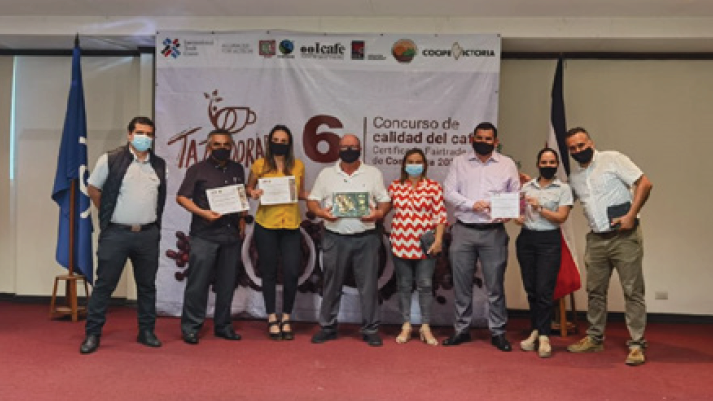
First Place of Gold Cup 2021 stays in CoopeVictoria

  • -CoopeVictoria also won third place in the competition with her Geisha Ines Process Washed Coffee.
  • -For three consecutive years CoopeVictoria has won the First Place of the contest.

This Friday, April 9, the 2021 Golden Cup contest ended successfully, a contest that rewards the quality of Costa Rican coffee certified as Fair Trade.

Under the supervision of a jury led by the experienced national taster Esdras Vega on behalf of the Costa Rican Coffee Institute (ICAFE), a total of 22 samples delivered by 6 cooperatives were tasted, including Coopevictoria, an organization that obtained for the third consecutive year the first place in the contest with its Geisha Inés coffee, natural process, produced at Finca Inés at more than 1,600 meters above sea level.

“To once again achieve first place in the competition as specialty coffee, reaffirms the excellent work that is done on the farms and the benefit, in addition to the commitment that CoopeVictoria has with the quality of our coffee and this allows us to expose ourselves to the world as coffee of the highest quality, and well, a great honor to also receive third place in the same category, we are very grateful to the team that makes this possible ”, commented Mario Sibaja Pérez, CoopeVictoria’s Commercial Manager.

CoopeVictoria’s Geisha Inés coffee is part of a variety garden in which the organization has been working for some years at Finca Inés. The height of the place and the specialized agronomic management given to the harvested varieties has given the cooperative excellent results in terms of quality.

“The objective of the Garden of Varieties what it seeks is to produce coffees of varieties that provide an exotic and differentiated cup that allows us to access the most demanding specialty market niches worldwide,” said Sibaja.

Wycombe for Fairtrade to become a member of the Bucks Climate Action Group

The Decision

In its February 2021 meeting, the Steering Group of Wycombe discussed the merits of joining the Buckinghamshire Climate Action Alliance organization. 

There was a unanimous decision to back and support this alliance as climate change, climate justice, environmental degradation, and sustainability are becoming ever more important elements of fair trade generally, and with fair trade farmers and producers facing the brunt of climatic extremes caused largely by developed world policies and corporate neglect. 

Therefore, Wycombe Fairtrade will become an official member of this pressure group operating at county level and support action to ensure that the new Buckinghamshire Council gives due consideration to global warming and climate change issues, and takes measures to ensure a renewable resources base with “green energy” wherever possible.

Bucks Climate Action Alliance

The Bucks Climate Action Alliance (BCAA) is an umbrella organisation enabling all Bucks organisations and groups concerned about the Climate Crisis and Biodiversity Loss, to come together as one powerful voice, calling on Bucks Council to ACT NOW.

BCAA Mission

  • To persuade Buckinghamshire Council to acknowledge that there is a Climate Emergency.
  • Urgent action is required to meet Net Zero Emissions across the county now.
  • Embed potential climate change impacts as a key factor in all decision making across all the council’s policies and functions.
  • Ensure awareness of climate change threats to all residents and businesses in the county, and encourage appropriate action.

Actions

  • Evaluating Council strategy and giving constructive feedback
  • Raising important questions at Council Committee meetings
  • Co-ordinated Letter writing campaigns to highlight depth of feeling in  the county       
  • Engagement with Community Boards to champion the climate in local decisions.

Group Members Include

CAN-Risborough; The Chiltern Society; Sustainable Chesham; Speen Environmental Action Group; Bucks WI; Believers Action on Climate Change; MarlowCAN [an alliance of Marlow environmental groups); XR Chesham; Chesham4Fairtrade Steering Group; Chiltern Peace and Justice Group; Aylesbury Vale XR; Dan’s Refill Store in Chalfont St Peter; Wycombe Friends of the Earth; Risborough Environmental Group; Population Matters; and Wycombe For Fairtrade Steering Group.

For further details see the Bucks Climate Action Alliance (BCAA) website

Values

The Pathways for Change document describes and gives examples of the actions likely to be required by Buckinghamshire Council and others to address the Climate Emergency that we should all collectively be working towards.

BCAA seeks to prevent extreme weather like the 2020 UK floods affecting the county of Buckinghamshhire by the Council taking measures to ensure that decisions and policies made by the Council include adequate climate action responses to reduce t global warming and occurrences of severe weather extremes.